
2026 · APSARA CONFERENCE — "Wisdom in Action" · ZStack On-site — From AI Application Privatization to Enterprise AI Infrastructure Deployment
From September 22 to 24, the 2026 Apsara Conference was held at the Hangzhou International Expo Center. Under the theme "Intelligence goes beyond," this year's event focused on artificial intelligence, cloud computing, computing power infrastructure, and industrial applications.
ZStack made its appearance at the "AI Dedicated Cloud · Ecosystem Partners" exhibition zone in Hall 1 (Intelligent Pavilion), showcasing its latest solutions and practices around enterprise AI application privatization, AI infrastructure development, and the evolution of existing IT environments toward AI, while engaging in in-depth exchanges with customers, partners, and industry guests on site.
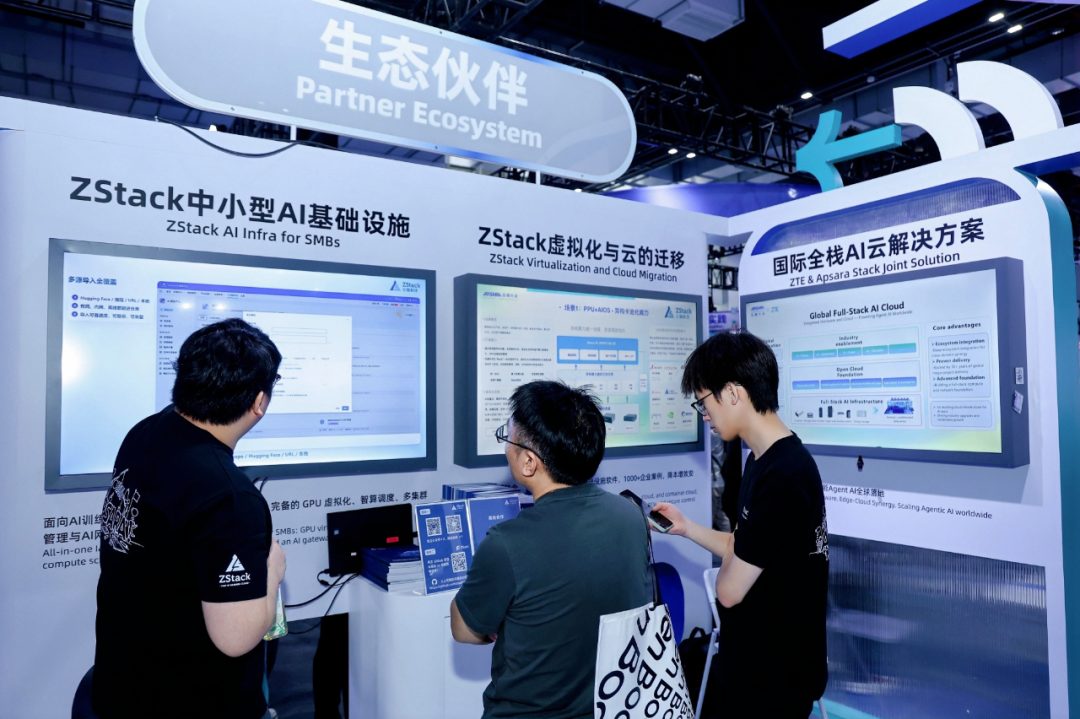
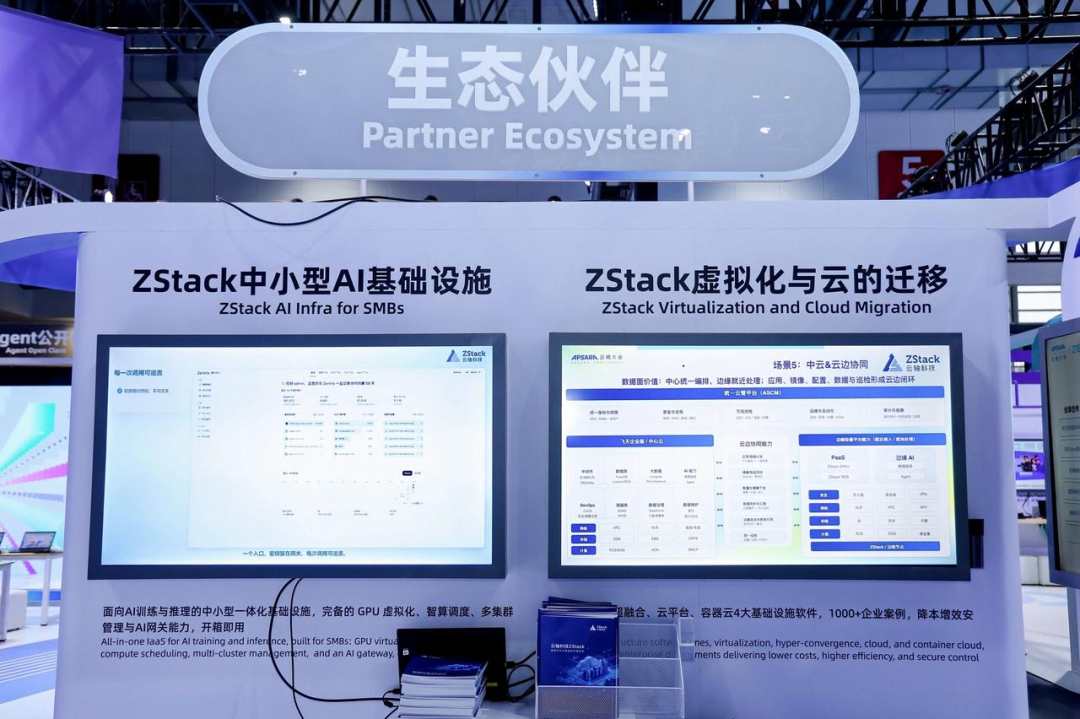
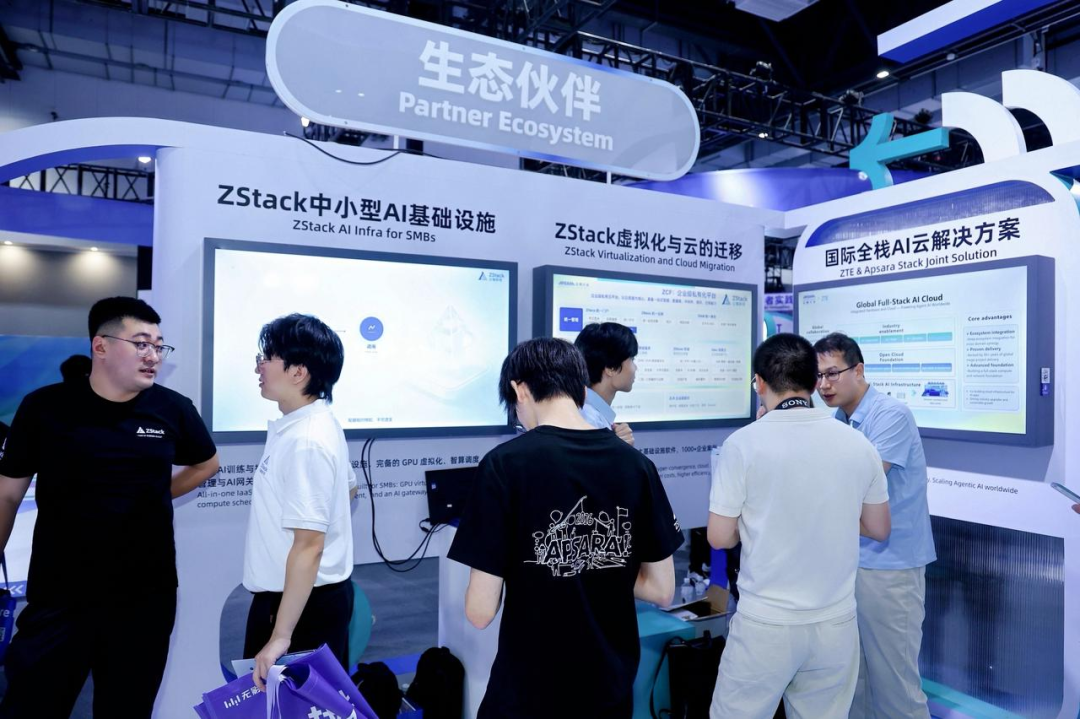
ZStack at the Apsara Conference
As AI accelerates from model capabilities toward real enterprise business, the questions enterprises care about are becoming increasingly concrete: how AI applications enter their own environments, how existing computing power can be utilized more efficiently, how heterogeneous resources can be managed uniformly, how models can be operated continuously, and how existing virtualization and private cloud infrastructure can carry the next stage of AI demands. At this year's Apsara Conference, ZStack addressed these real-world questions by presenting a practical path from upper-layer AI application privatization down to the continuous evolution of computing power, models, and infrastructure.
01 / PRIVATE AI APPLICATIONS — Partnering with Qwen Office to Explore Enterprise AI Application Privatization
During the conference, Qwen Office further released AI products and capabilities for enterprises. As AI office applications truly enter enterprise scenarios, beyond the application experience itself, data security, operational stability, and compatibility with existing IT environments have become issues that must be addressed during deployment.
As a strategically subsidiary of Alibaba Cloud, ZStack is working with the Qwen Office team to jointly develop solutions for private deployment scenarios. To meet the operational requirements of AI office applications, ZStack is advancing technical adaptation and optimization at the infrastructure layer, providing customers with an integrated solution spanning applications and infrastructure for a smooth and stable user experience. Related results are expected to be unveiled in the near future.
Qwen Office represents a typical scenario of enterprise AI applications accelerating into real business. Around such scenarios, ZStack continues to strengthen its underlying cloud and AI infrastructure capabilities to support the stable operation of upper-layer applications in enterprises' own environments.
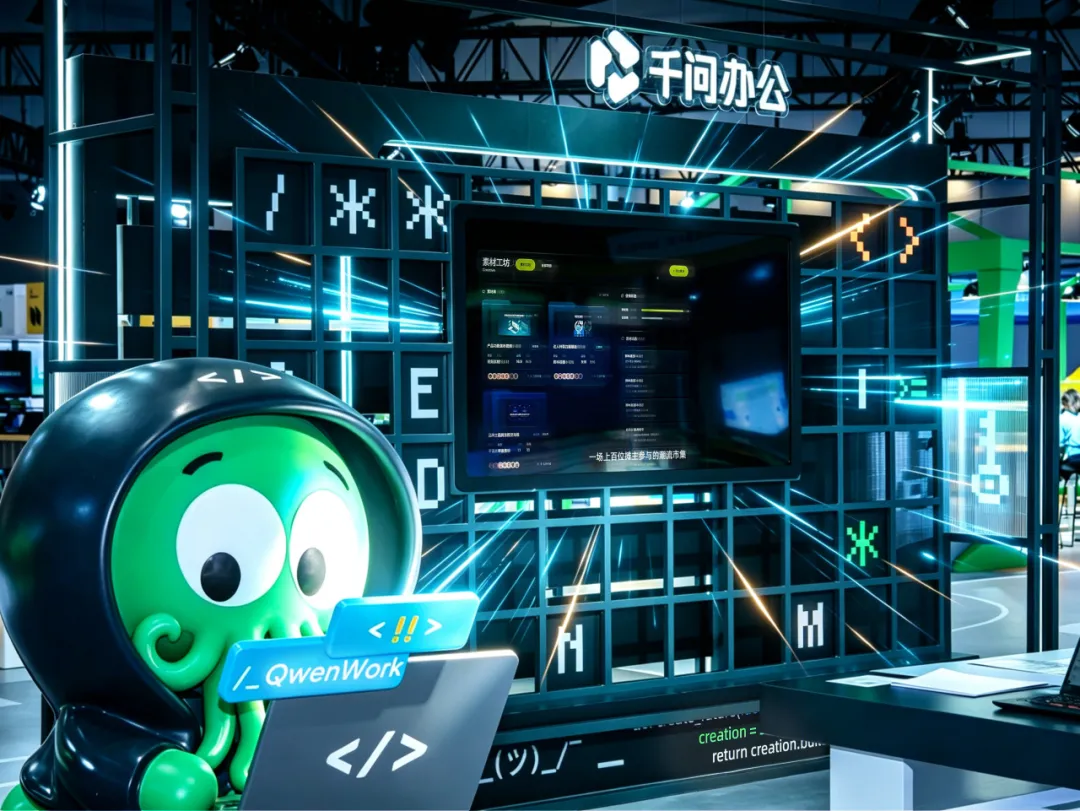
On-site photos of Qwen Booth
02 / ENTERPRISE AI INFRASTRUCTURE — From Computing Power Governance to Application Deployment: Building Enterprise AI Infrastructure
For AI applications to truly take hold, beyond the upper-layer applications themselves, underlying computing power, models, and resource operations capabilities are equally indispensable. At this year's Apsara Conference, ZStack showcased its solutions for enterprise AI infrastructure, helping enterprises make fuller use of their existing infrastructure and gradually build a unified resource foundation for AI businesses through unified management and scheduling of heterogeneous computing power, model service management, and computing resource operations.
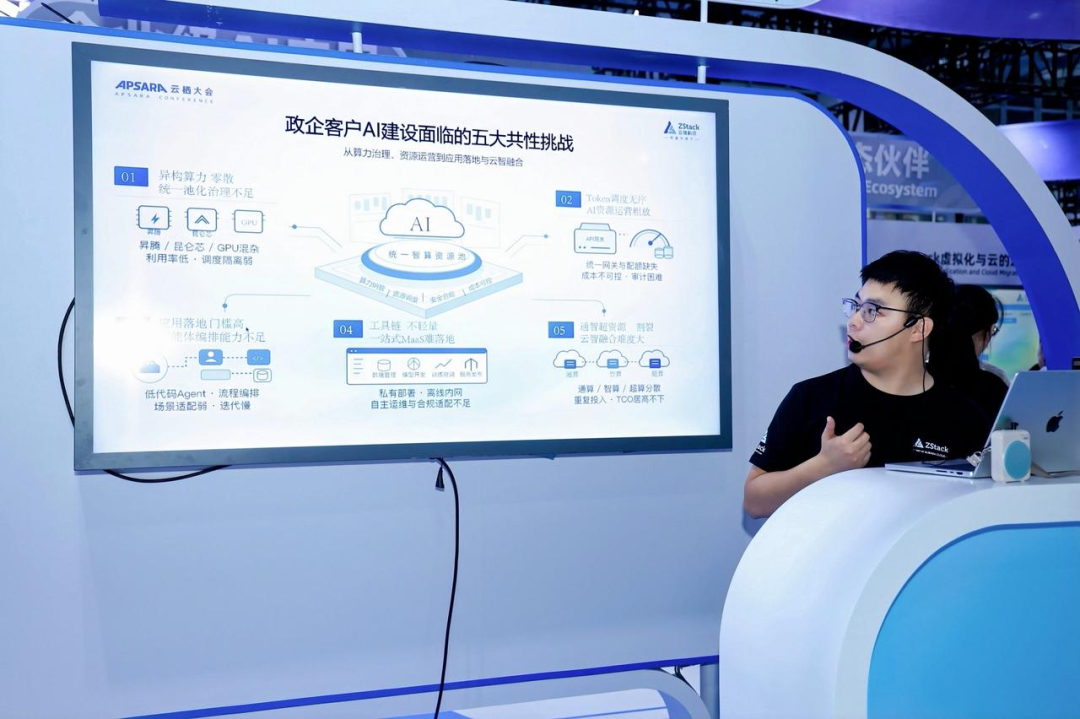
During the conference, Liu Xiaomin, Director of Ecosystem Technology Solutions at ZStack, delivered a keynote titled "ZStack AI Infrastructure Solutions & Success Practices." Focusing on the computing power governance, resource operations, and application deployment issues commonly faced by government and enterprise customers in their AI initiatives, the session outlined the infrastructure evolution path from underlying computing resources, through computing power operations and scheduling and model services, to AI applications.
On the computing power side, ZStack supports unified management and scheduling of different types of GPU resources and provides multiple ways to use GPU resources for different business scenarios, helping enterprises revitalize their existing computing power and improve resource flexibility.
On the model and operations side, the platform covers the full model lifecycle — import, fine-tuning, inference, and evaluation — and, through capabilities such as computing power portals, resource operations, and AI gateways, further transforms underlying computing power into AI services that can be invoked by business and operated continuously.
Building on this, the joint solution from ZStack and OpenTrek combines ZStack's private deployment foundation with OpenTrek's model integration and agent development capabilities, enabling customers to build and run AI applications locally. The solution further covers model integration, fine-tuning adaptation, agent construction, application release, and operations monitoring, providing government and enterprise customers with a more lightweight approach to on-premises AI application deployment.
ZStack AI Infrastructure Keynote / Roadshow On-site
03 / CLOUD TO AI EVOLUTION — From VMware Replacement to the Continuous Evolution of Cloud and AI Infrastructure
For enterprises already running virtualization and private cloud, building AI infrastructure does not mean tearing down existing systems and rebuilding a set of disconnected platforms. In this keynote, ZStack also presented its VMware replacement and infrastructure evolution path for AI scenarios: depending on the enterprise's current scale and IT architecture, it can progress from virtualization replacement and hyper-converged infrastructure replacement to cloud platform upgrades, and then further carry AI infrastructure development.
Throughout this process, enterprises can continue to leverage their existing servers, virtualization resources, and GPU assets, while gradually adding GPU management, model service, and AI application support capabilities as business needs evolve.
ZStack AIOS further extends capabilities such as GPU scheduling, VRAM partitioning, MaaS, and AI gateways on top of existing cloud infrastructure, providing continuous support for enterprises evolving from cloud infrastructure to AI infrastructure.
From exploring AI application privatization, to heterogeneous computing power management, model services, and computing power operations, and further to the evolution of existing virtualization environments toward AI infrastructure, ZStack presented at this year's Apsara Conference an AI deployment path that is closer to enterprises' real IT environments. The essence of this path is not to build yet another disconnected new infrastructure for AI, but rather, on top of enterprises' existing IT investments, to progressively unify computing power management, make model services more accessible, and enable AI applications to truly enter enterprises' own environments while evolving continuously alongside business growth.
For ZStack, moving from cloud infrastructure to AI infrastructure is likewise not about starting a new technical route from scratch, but rather extending its accumulated expertise in virtualization, private cloud, and heterogeneous resource management further into computing power, models, and AI application support.
Looking ahead, ZStack will continue advancing joint exploration with Qwen Office and more ecosystem partners, and will keep refining its capabilities in heterogeneous computing power scheduling, model services, AI gateways, agent applications, and existing infrastructure evolution — helping enterprises move toward AI more smoothly while protecting their existing investments.
Enabling AI to truly enter enterprises' own environments and run stably in real business — this is what "Wisdom in Action" is meant to mean at the infrastructure layer.