
Bare-metal delivery, temporary network authorization, and alert handling — these seemingly trivial day-to-day operations keep adding to the operations and maintenance (O&M) burden as business scales.
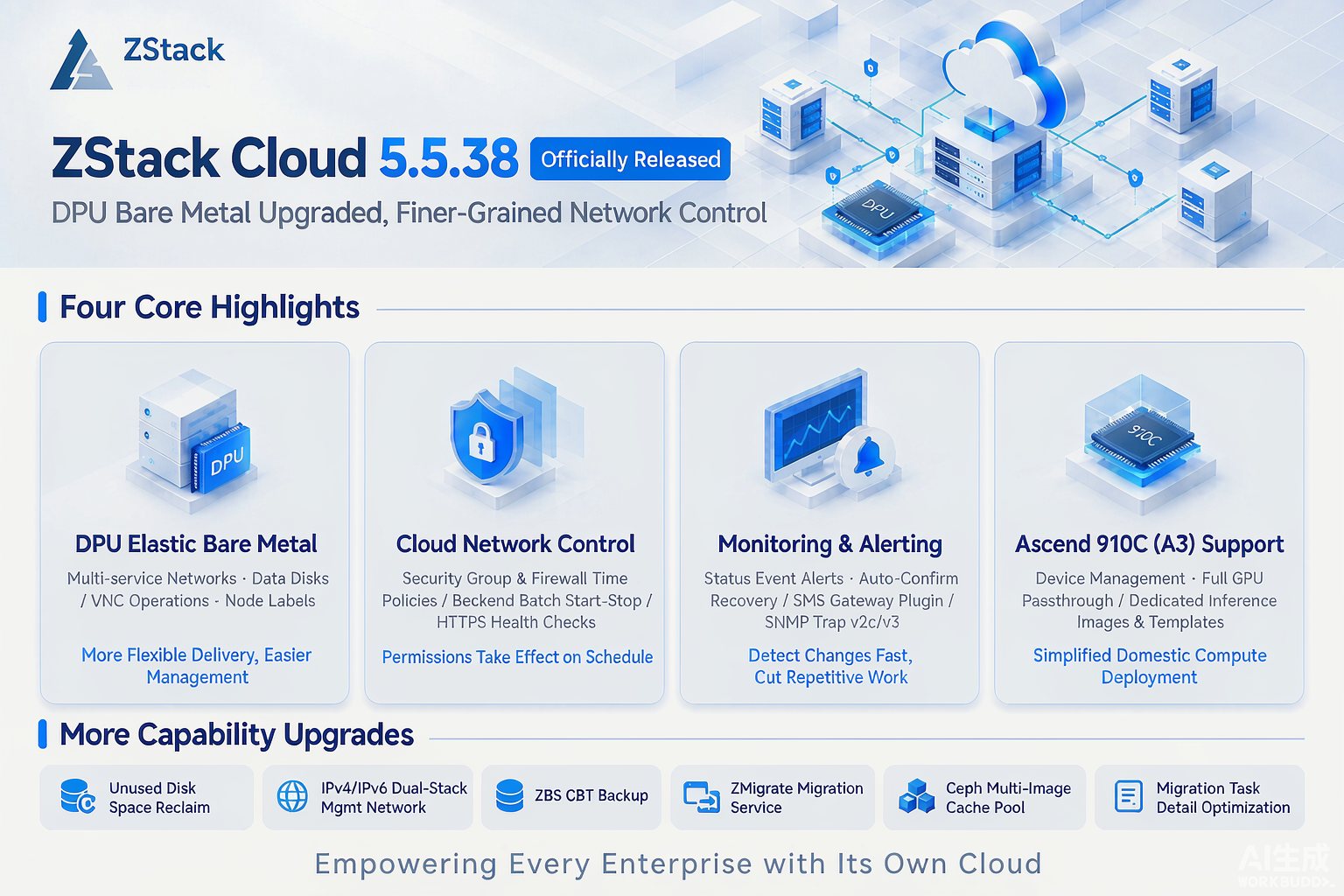
Recently, ZStack Cloud 5.5.38 was officially released!
It upgrades DPU elastic bare metal, network management, monitoring & alerting, and storage & migration capabilities, and adds support for the Ascend 910C (A3) chip — making resource delivery more flexible and daily O&M more efficient, while offering enterprises more options for deploying domestic AI computing power.
The core features in this release include:
DPU Elastic Bare Metal Enhancement: DPU elastic bare metal instances now support multiple business networks, data cloud disks, and VNC console management, improving the experience from resource configuration to daily management.
Domestic AI Computing Adaptation Expansion: Added Ascend 910C (A3) device management, full card passthrough, and dedicated inference images and templates, supporting enterprises deploying AI workloads on domestic computing power.
Cloud Network Management Enhancement: Security Group and VPC firewall rule sets now support time-based policies so access rules take effect on schedule; load balancers support batch start/stop of backend servers and HTTPS health checks, making service release and maintenance easier.
Monitoring & Alerting Enhancement: Added event alerts for cloud host running/stopped states, supports automatic acknowledgment after resource alerts recover, and extends SMS gateway and SNMP Trap integration, reducing repetitive operations and connecting with existing O&M systems.
01 / ELASTIC BARE METAL
DPU Elastic Bare Metal Enhancement: Flexible Configuration, Convenient Operations
Multiple Networks and Data Cloud Disks to Meet Business Deployment Needs
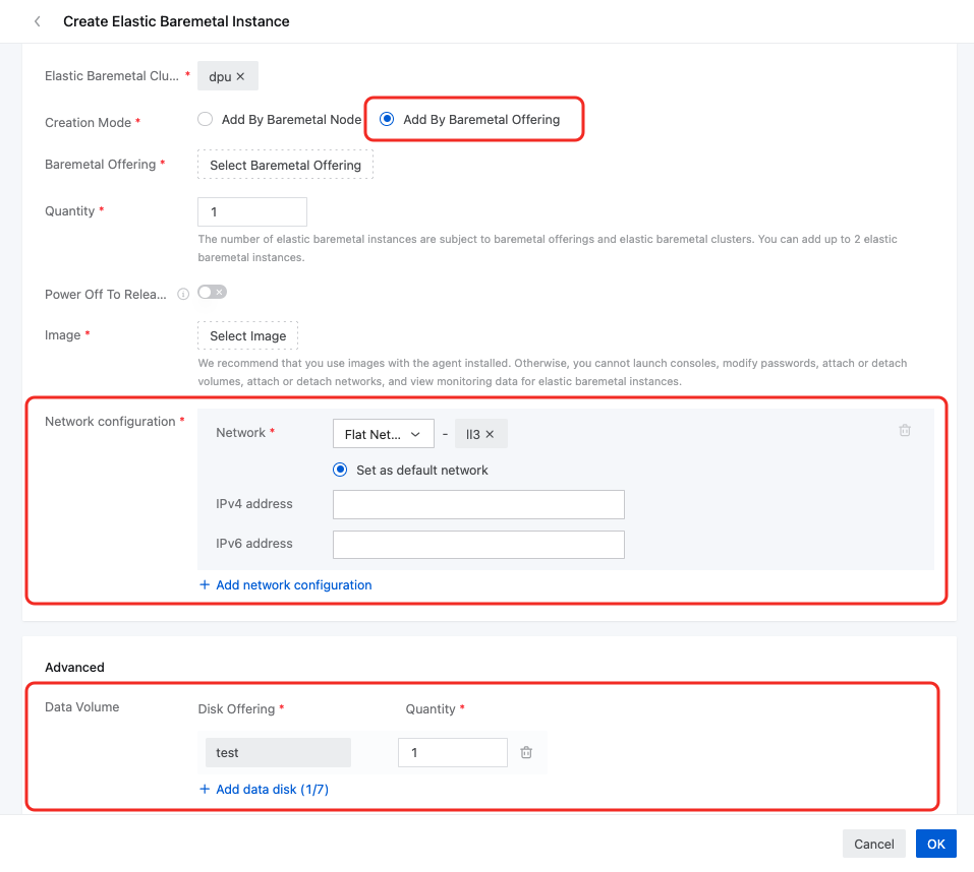
Business deployment requires computing resources as well as supporting network connections and data storage. This release enhances the network and storage configuration capabilities of DPU elastic bare metal, supporting the configuration of multiple business networks, IP addresses, and data cloud disks when creating instances, allowing compute, network, and storage to be combined according to business needs for convenient resource delivery.
Improved O&M and Classification Management for Daily Operations
Once DPU elastic bare metal instances are put into use, system maintenance, remote troubleshooting, and resource lookup are daily tasks. The new version supports start/stop, restart, OS reinstall, login password change, and VNC console management, enabling administrators to perform common operations directly. It can also reuse the existing management network Bond configuration on the DPU SoC, connecting with the existing environment.
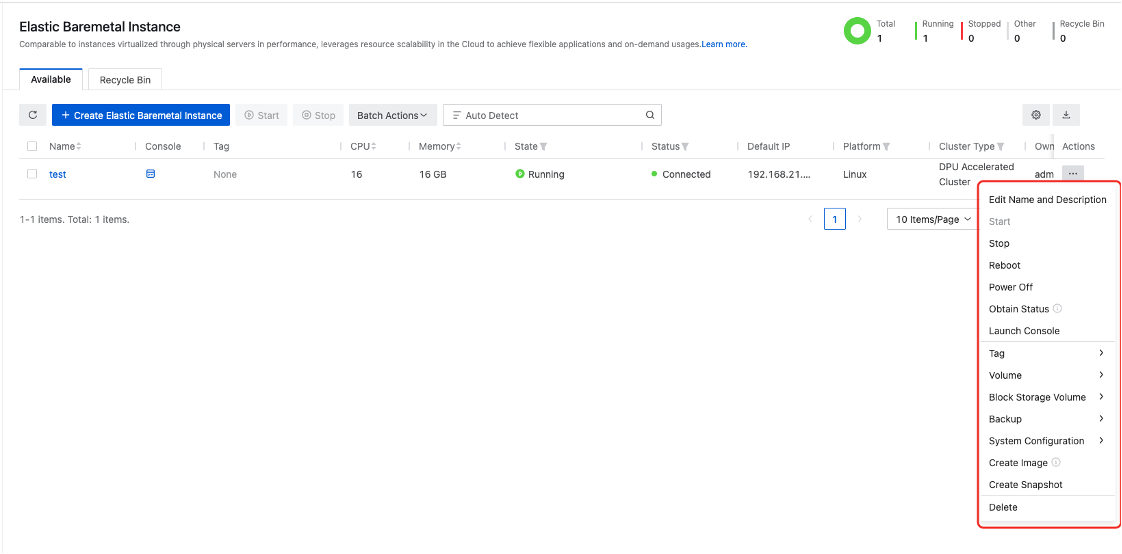
Facing an ever-growing number of nodes, the new tag management allows filtering by project and purpose, reducing one-by-one lookup and improving the efficiency of batch resource management.
02 / DOMESTIC AI COMPUTING
Domestic AI Computing Adaptation Expansion: New Ascend 910C (A3) Chip Support
Using domestic computing power for AI workloads requires hardware recognition, resource allocation, and runtime environment matching.
The new version adds Ascend 910C (A3) adaptation, providing device management, full card passthrough, and dedicated inference resources, helping enterprises move from computing power access to application deployment.
Recognize the "One Card, Dual Chips" Structure to Standardize Compute Allocation
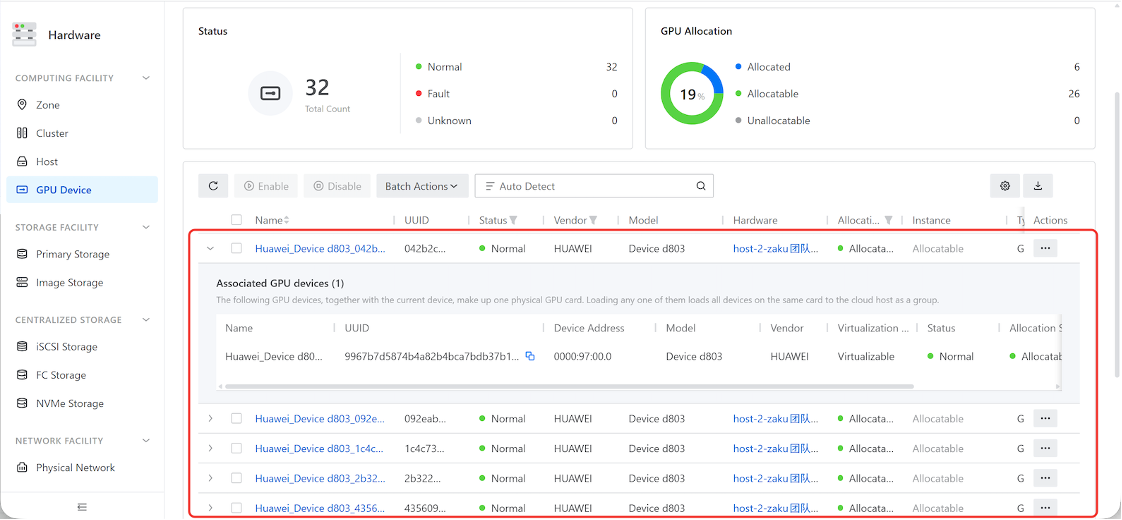
The Ascend 910C uses a one-card dual-chip structure, so resource allocation must account for the correspondence between chips on the same card.
The platform can recognize this relationship, collect chip-level health status, monitoring, and interconnect information, and allocate and passthrough the two chips on the same card as a group to cloud hosts — avoiding the splicing of leftover single chips from different cards, making device status and resource usage clearer.
Provide Dedicated Images and Templates to Simplify Environment Preparation
An inference environment needs to match the chip architecture and software components, and preparing it manually adds configuration and validation work.
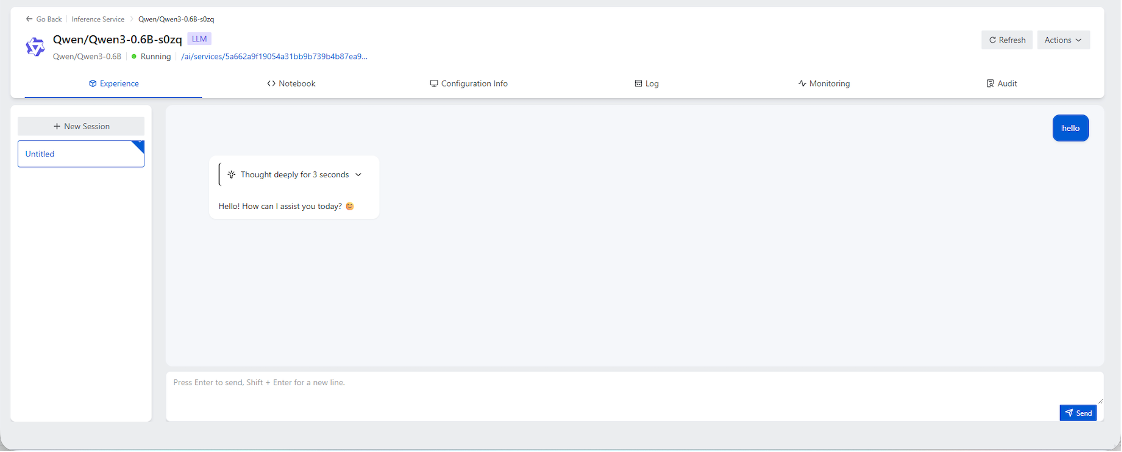
The new version provides A3-specific ARM64 inference cloud host images, vLLM-Ascend templates, and application packages to simplify environment preparation.
Under validated configurations, it supports single-machine single-card, multi-card, and multi-machine multi-card inference, covering text generation, embedding, and reranking; it supports single-machine single-card and multi-card fine-tuning workbench, and can connect with applications such as Dify, MaxKB, and FastGPT, meeting deployment needs from model serving to upper-layer applications.
03 / CLOUD NETWORKING
Cloud Network Enhancement: Access Rules Take Effect on Schedule, More Convenient Maintenance
Time-Based Rule Policies to Reduce Missed Temporary Authorization
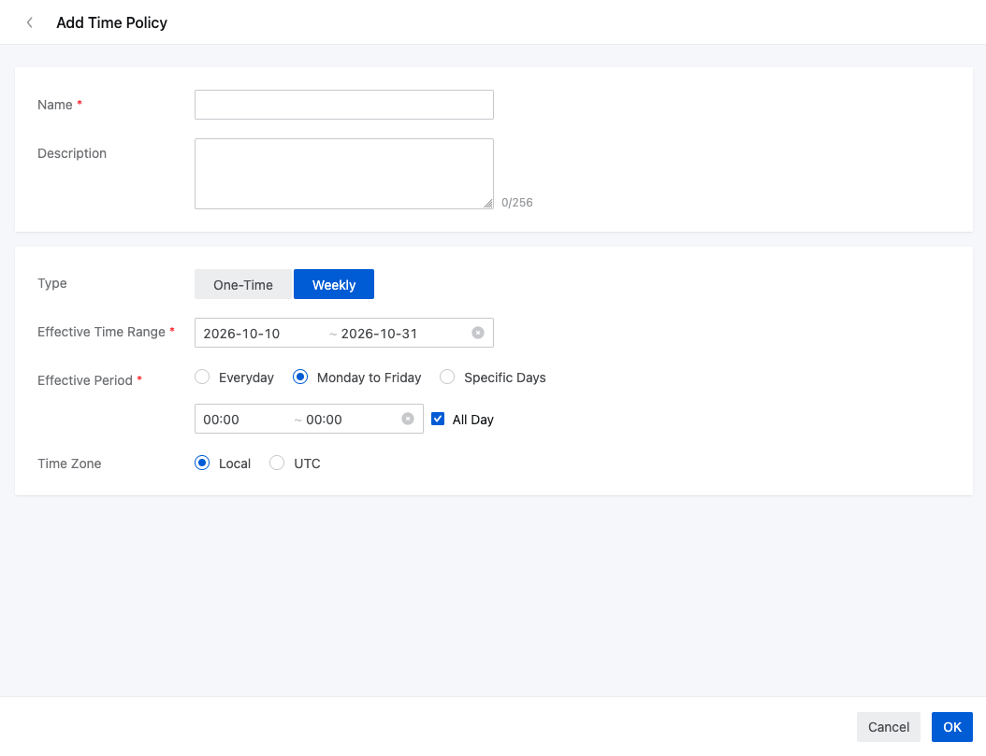
Office access is only open during working hours, and temporary maintenance requires revoking permissions afterward — relying on manual rule toggling is prone to oversight. The new version supports setting one-time or weekly recurring time policies for Security Group and VPC firewall rule sets, so rules take effect or stop taking effect on schedule. O&M staff can arrange access windows in advance, reducing the risk of timed on-call and forgotten expiration.
Batch Start/Stop Backend Servers to Simplify Traffic Draining and Recovery
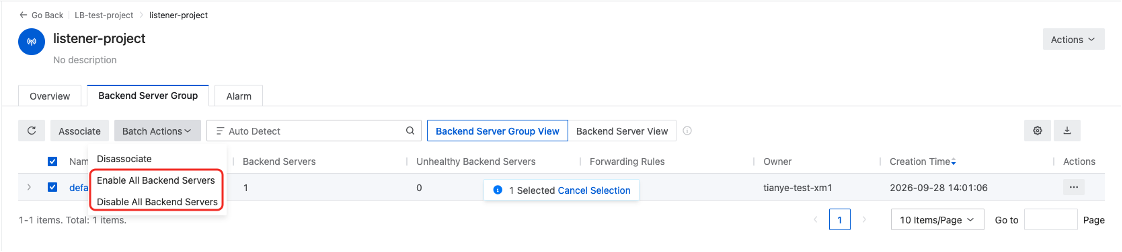
During service release or server maintenance, it is usually necessary to stop distributing new traffic to target servers first, then restore it afterward. The new version supports batch start/stop of backend servers in load balancer listeners: once stopped, they no longer receive new traffic while retaining configuration such as ports, weights, and server groups; after re-enabling and passing health checks, they resume carrying traffic. Temporary maintenance no longer requires repeatedly rebuilding configurations, and multiple servers can be managed uniformly.
New HTTPS Health Checks to Match Encrypted Service Probing
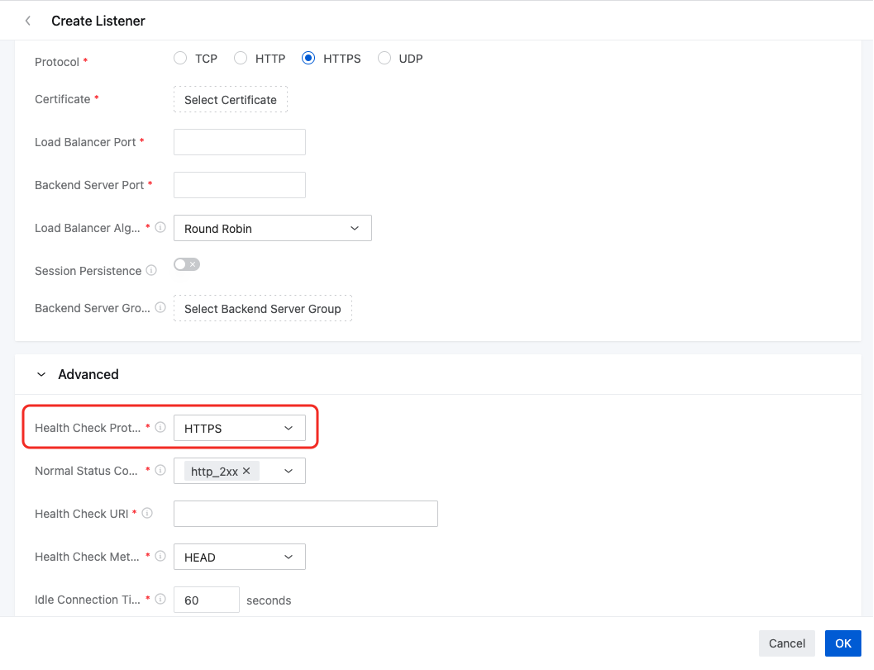
For Web services using HTTPS, health probing must also match their encrypted access method. The new version supports HTTPS health checks with configurable path, request method, expected status codes, port, and health threshold, allowing O&M staff to set judgment criteria based on the actual service and meet encrypted probing needs.
04 / MONITORING & ALERTS
Monitoring & Alerting Enhancement: Timely Awareness of Changes, Less Repetitive Handling
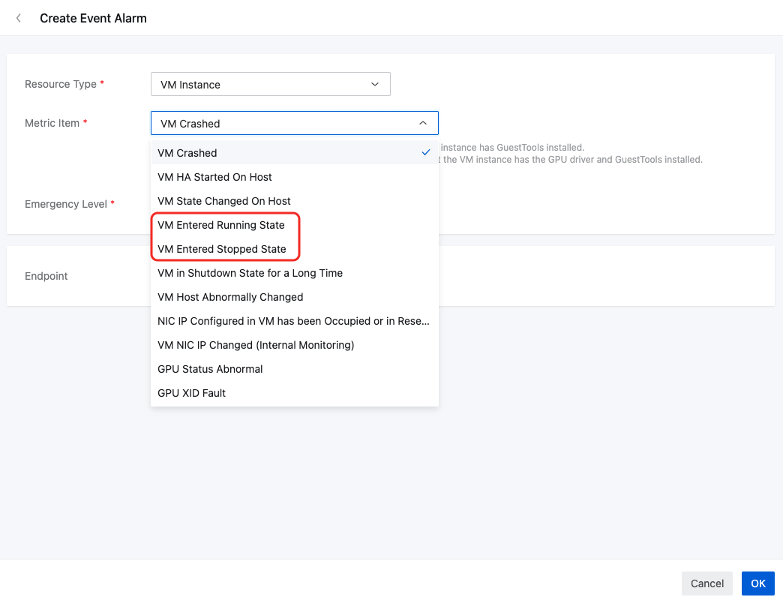
New Cloud Host Status Alerts for Timely Follow-Up on Runtime Changes
Relying on manually refreshing pages makes it hard to continuously track the runtime changes of multiple cloud hosts.
The new version adds event alert rules for "cloud host enters running state" and "cloud host enters stopped state". Users can create alarms on demand to promptly learn of start/stop changes, providing a basis for business verification and subsequent handling.
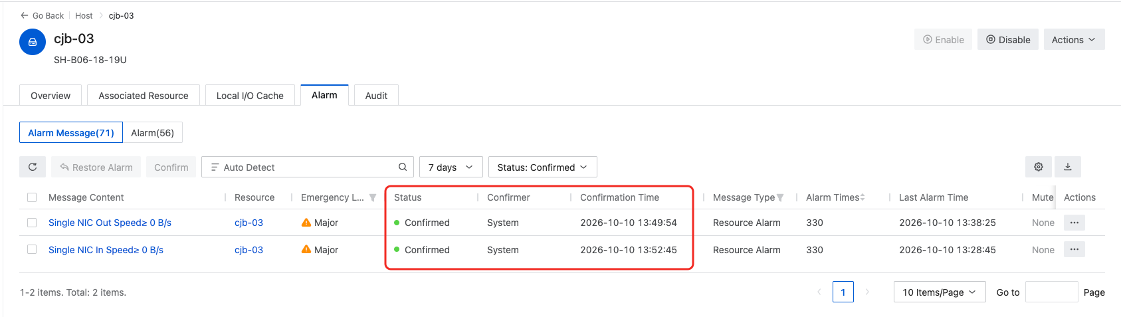
Automatic Acknowledgment After Recovery to Focus on Pending Issues
After resources return to normal, acknowledging historical alerts one by one still consumes O&M time. With "automatically acknowledge after resource alert recovery" enabled, related alert messages and recovery messages that meet recovery conditions are automatically acknowledged, reducing repetitive handling and letting O&M staff focus on unresolved issues.
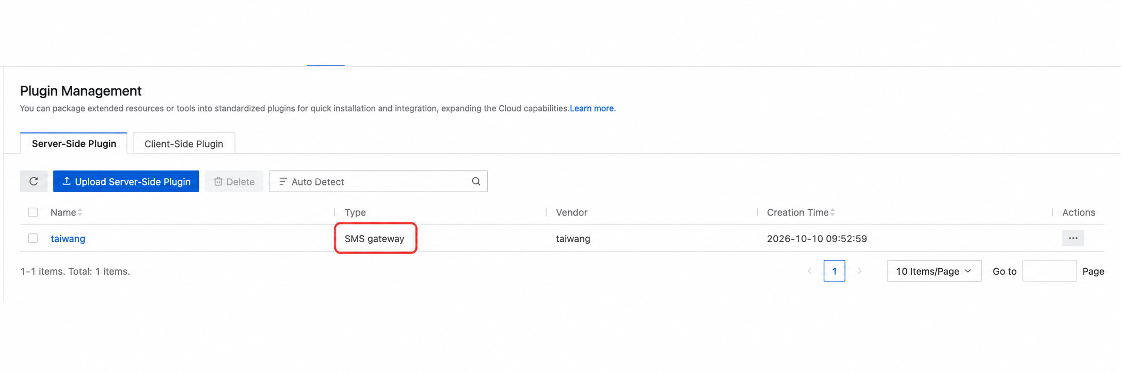
Plugin-Based SMS Gateway Integration for More Flexible Alert Delivery
Enterprises use various SMS gateways, and alert notifications must adapt to existing channels. The new version supports integrating SMS gateways through custom plugins to push platform alerts via SMS, making it easy to reuse existing notification capabilities so O&M staff can receive messages even away from the platform page.
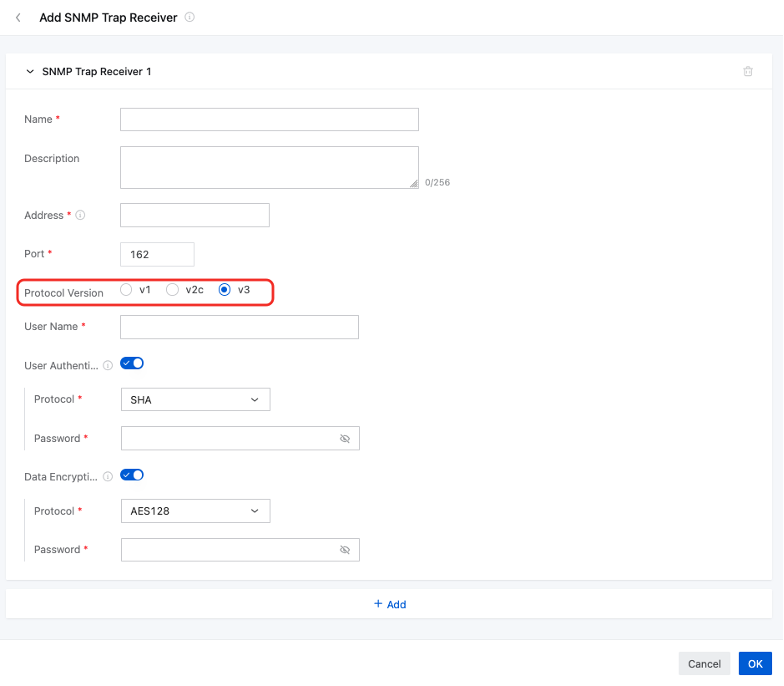
SNMP Trap Protocol Extension to Connect with Unified Monitoring Systems
When enterprises manage multiple systems through a unified monitoring platform, protocol compatibility affects the integration of cloud platform alerts. The new version adds v2c and v3 support on top of SNMP Trap v1 compatibility, meeting more integration and security requirements, facilitating centralized reception of cloud platform alerts and reducing switching between multiple platforms.
05 / MORE IMPROVEMENTS
Other Improvements
Storage & Backup
Unused disk space reclamation: reclaim unused space through q35 and Virtio BLK Discard, reducing underlying storage usage and improving capacity utilization.
ZBS primary storage CBT backup: support full and incremental backup and recovery of root cloud disks and data cloud disks on CBD-protocol primary storage, making it convenient to schedule backups by business needs.
Ceph multi-cache pool: support configuring multiple cache pools on the same Ceph primary storage, selecting caches by global policy when creating cloud hosts, changing images, and resetting root cloud disks, improving management flexibility.
Platform Management
Management network dual stack: improve IPv4/IPv6 dual-stack deployment and access capabilities, providing more options for platform management and node access.
Migration & Task Viewing
ZMigrate migration service: for VMware platform business migration needs, ZMigrate can be installed and used through the application marketplace to migrate cloud hosts from the VMware platform to ZStack Cloud online.
Migration task detail optimization: task details now centrally display cloud hosts, source and target physical machines, and primary storage, helping O&M staff quickly confirm the migration scope and execution status.
From reducing repetitive configuration, to making access permissions take effect on schedule, to improving domestic computing power deployment support, ZStack Cloud 5.5.38 applies its upgrades to the concrete problems enterprises face in daily cloud usage, making resources easier to use and management more efficient.
Welcome to contact ZStack's regional teams to learn about the new version's features and applicable solutions, and to plan your upgrade based on your existing environment.