
ZVF refines multi-tenant management, resource pools, self-service, and metering & billing to bring order to the shared allocation, delivery, and consumption of virtualized resources.
Virtualization lets enterprises centrally manage compute, storage, and network resources. As more departments and projects share this infrastructure, the way resources are used is changing too. Development teams want to spin up test environments quickly, department heads need visibility into resource consumption, and operations teams must ensure VMs run within planned boundaries. Who gets what resources, how requests are delivered, and how costs are viewed — these everyday questions are exactly what virtualization operations must solve. In this upgrade, ZVF further refines resource allocation, request delivery, and usage management, providing management capabilities around organizations, authorization, requests, and cost that connect the platform's planned resource scope with actual departmental usage.
In ZVF, platform administrators define the resource scope and provisioning rules; users within an organization request and use resources within their authorized scope; approval and metering & billing support day-to-day operations.
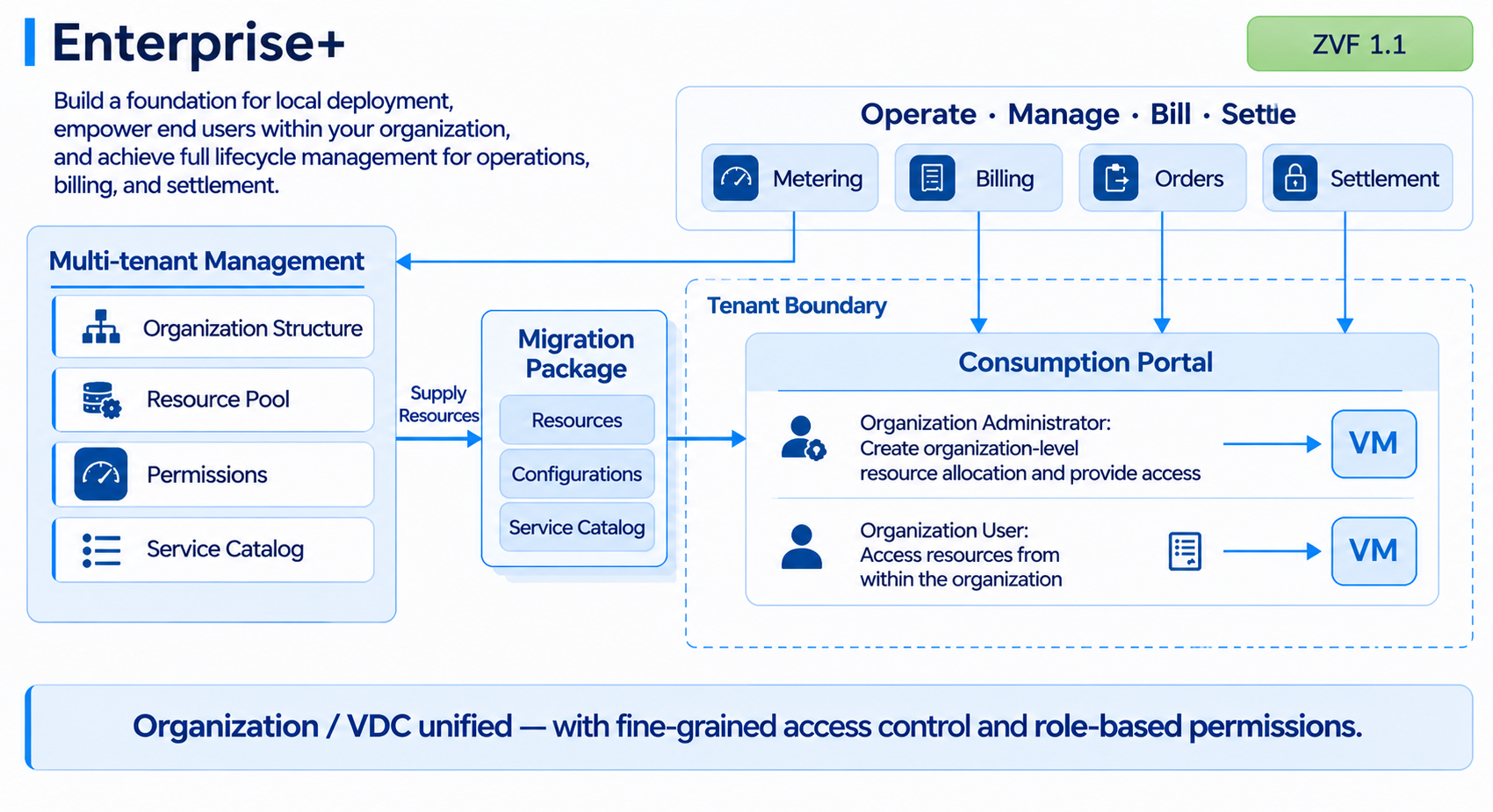
01 / Multi-Tenant Management
One platform serving many organizations and roles.
When virtualized underlying resources are shared, platform teams, department heads, and business users care about different things.
Through organizational hierarchy, role-based permissions, and quota management, ZVF defines the management and usage scope for each organization.
Enterprises can organize by department or project, letting different roles work within their own data scope and permissions. Platform administrators hold a global view of resources, organizational authorization, and overall usage; organization administrators manage the resources and users within their authorized scope, taking on their department's demands; ordinary users focus on their own requests, VMs, and bills. If staffing is limited, a platform administrator can also take on organization management.
With organizational quotas, administrators can also cap how much CPU, memory, and storage each department can use at most. The platform plans centrally, departments use on demand — shared resource allocation combines a division of responsibility with usage constraints.
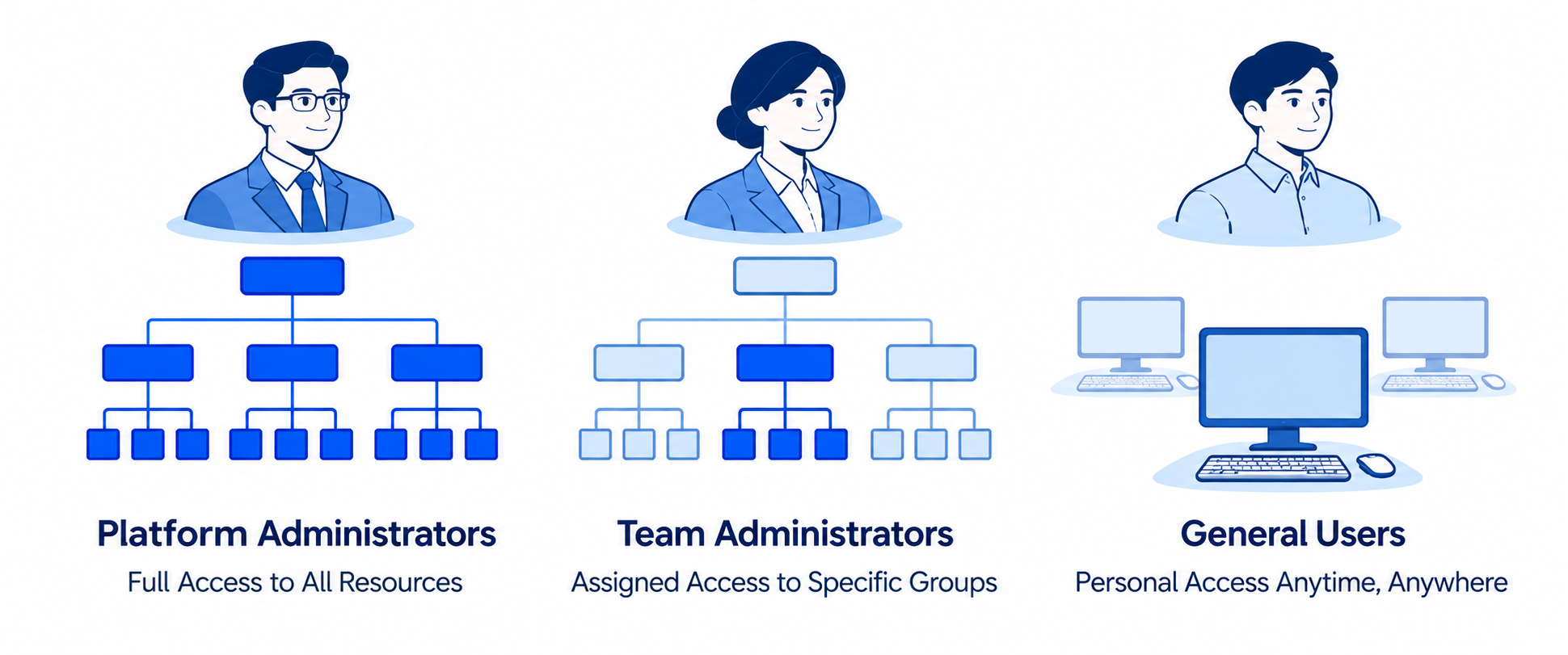
02 / Resource Boundaries
Resource pool within clear boundaries.
Development teams want to request VMs on their own, while operations must ensure those VMs land on the right hosts, storage, and networks.
To that end, administrators can prepare resource pools in advance, bringing suitable clusters or hosts, datastores, and distributed port groups into the available scope, so subsequent requests follow the established resource plan.
These underlying boundaries go beyond the management interface.
Under the ZVF approach, the resource scope administrators plan is enforced by the underlying layer. Exactly which compute, storage, and network resources a VM in a resource pool can use is clearly constrained.
Resource pools can be associated with specific organizations based on business planning: a pool can serve as a shared resource scope across multiple departments, or a dedicated pool can be carved out for a specific project. Combined with organizational quotas, enterprises can both clarify "which resources can be used" and control "how much can be used at most," establishing clear boundaries for departmental self-service.
03 / Self-Service Delivery
The same request, without starting from scratch.
A new member joins a project and needs a test VM. This kind of environment has been delivered many times before, yet operations often has to prepare it all over again.
As people change and projects expand, such repetitive work keeps piling up.
ZVF provides standardized VM delivery through a service catalog: confirmed VM configurations are packaged into reusable templates for subsequent similar requests.
Platform administrators — or organization administrators with the appropriate permissions — predefine VM specs, underlying resource scope, and related configuration based on a resource pool, then publish the catalog to the relevant organization. The same environment only needs to be packaged once, and subsequent similar requests can reuse it; when requirements change, prepare the corresponding catalog to match the new requirements.
For business users, the same request now has a ready-made entry point; for administrators, one preparation serves many requests, freeing their energy for resource planning and special needs.
If an image supports script execution, administrators can also preset allowed initialization scripts. Applicants select and fill in parameters as needed, reducing repetitive configuration after delivery.
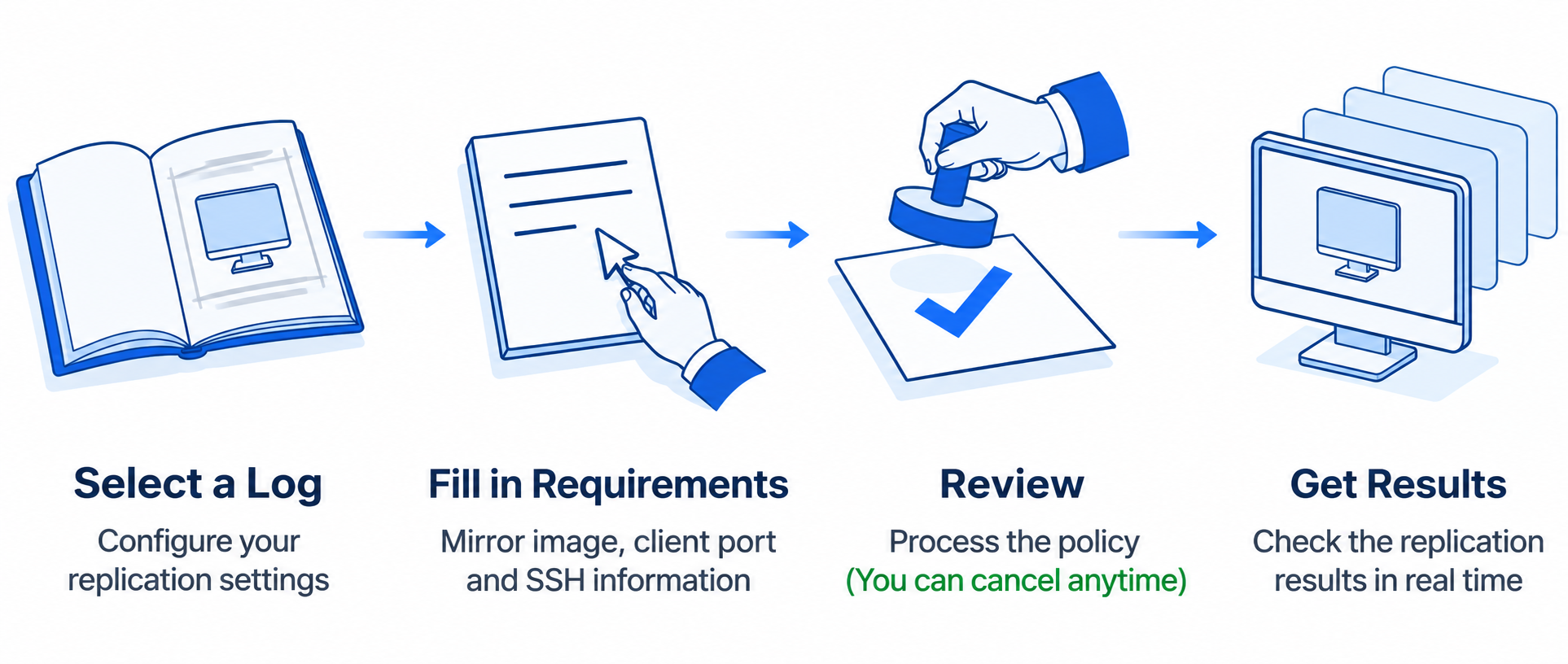
An ordinary user simply selects an available service catalog within their organization and confirms the necessary information for the request. CPU and memory specs are predetermined by the catalog, and the underlying resource scope is constrained by the resource pool — applicants don't need to study host, cluster, and storage configuration item by item, and can focus on their own usage needs.
Where compliance approval is required, approval workflows are configured per business scenario, resources flow according to rules, and applicants can check progress and approval records at any time. For requests that don't require approval, they go straight into the delivery process per configuration, and applicants receive resources directly.
Once quotas and underlying conditions are met, the platform delivers the VM according to the request — connecting resource requests, departmental management, and delivery.
04 / Metering and Billing
Making resource usage and cost attribution clearer.
Customers often ask whether virtualization resources come with bills, because a bill is also feedback on how resources are used. When multiple departments share virtualization infrastructure, after resources are handed out, the costs incurred during use must also be accounted for: which department used which resources, and how much a personally requested environment cost, should all be traceable.
With clear bills, users can understand costs, and enterprises have a basis for internal accounting and resource planning.
ZVF's metering and billing presents resource costs through bills and line items, with viewing scope divided by platform, organization, and individual: platform administrators see overall costs, organization administrators see resource spending within their managed scope, and ordinary users can query the bills and details of their own resources. Costs generated by shared infrastructure are attributed to specific organizations and users, making it easy for all parties to reconcile and communicate.
Cost information also helps users make choices when requesting.
At the request stage, users can refer to the cost information on the page to understand the cost of the resources they need; after delivery, they can review cost details through bills. In this way, business users can weigh resource costs while considering whether a configuration is adequate.
Combined with VM monitoring, users can also view CPU utilization, memory usage, and their trends over time.
For example, a developer requests a larger VM for testing and, after using it for a while, checks the bill to understand the cost, then uses monitoring to observe actual load, judging whether the spec matches the business need and planning resource usage accordingly. Administrators also have concrete data to draw on when discussing resource arrangements with users.
This ZVF upgrade ties together organizational division of responsibility, resource boundaries, standardized delivery, and cost management: the platform plans resources centrally, departments and users consume them autonomously within authorized scope, and everyone stays on top of cost and operations.
Building on the native collaboration between the management plane and the control plane, virtualization management extends further into day-to-day operations.
Virtualized resources are now centralized. The next question: how to make each department's usage smooth and every cost visible? Contact ZStack sales, and based on your resource scale and business scenarios, learn how ZVF meets the needs of multi-department resource sharing, self-service requests, and cost accounting — and moves your existing virtualization platform toward cloud operations.